
Subscribe
Free Coaching Call
Need some quick advice? Jump on a call with me, and I’ll provide some insight and action. This is NOT a sales call where I try to get you to hire me. Promise!
Episode Overview:
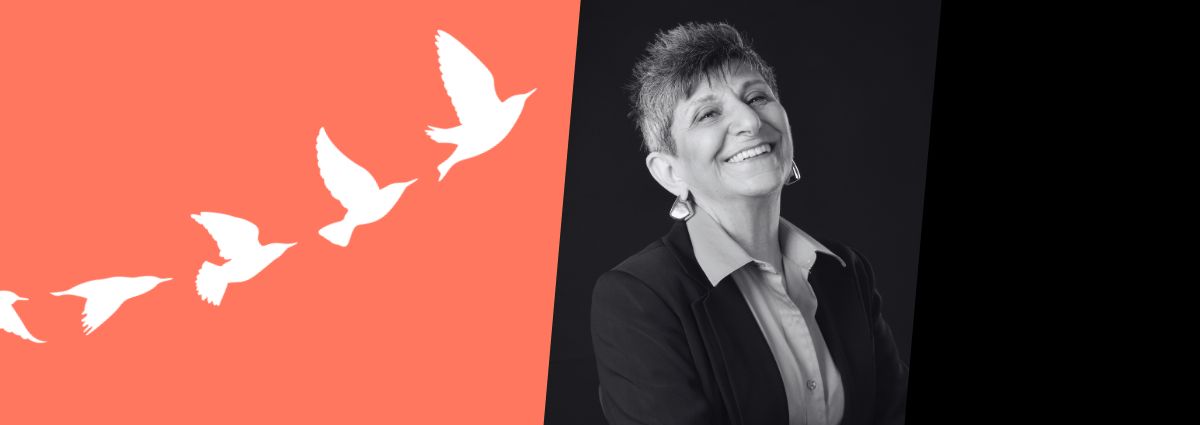
Most leaders think they’re being thoughtful when they put off a hard decision. Fay Niewiadomski says they’re usually just scared. In this episode, Fay talks about why we hold off on the conversations, restructures, and partnerships we know need to change. She’s a former dean, an award-winning change management strategist, and the author of Decisions That Matter, with 50 years of academic and business experience.
Fay explains the control, risk, and avoidance trap that keeps smart people stuck. She also gets into why consensus is often the lowest common denominator of decision-making, and how stress quietly changes your blood chemistry and your judgment. Then she lands the uncomfortable truth: the thing you’re afraid will happen if you decide is often exactly what happens when you don’t.
Additional Resources:
* Website
* Website
* LinkedIn
* Instagram
* Substack
* Facebook
* YouTube
* Book: Decisions That Matter: Rethink, Reimagine, Reset Your Life
Timestamps:
00:00:00 – Cold Start & Intro
00:04:36 – Why We Keep Putting Off the Hard Call
00:09:21 – Popularity Isn’t Leadership
00:10:50 – How Stress Hijacks Your Judgment
00:13:24 – Thoughtful or Just Avoiding It?
00:15:45 – The Fear That Comes True When You Wait
00:17:26 – Losing 17 Years of Work Overnight
00:27:34 – Why You Shouldn’t Trust Your Gut
00:36:40 – Learning to Walk Away From Toxic Leaders
00:40:03 – Three Questions for Your Stuck Decision
Fay Niewiadomski (00:02)
That cost is a loss of opportunity, a loss of respect, a loss of having a close relationship with someone who cares enough about you because you’re not making that commitment. Your character in getting to know who you are as a person, what you’re willing to do. You know, decisions, you’re right. The decision is not made on the spur of the moment. It’s accumulation.
Skot Waldron (00:32)
When I’m not hosting Unlocked, I’m speaking at events all over the world. I’m helping leaders and I’m helping teams communicate better. I’m helping them build trust faster and actually enjoy working together. I’ve spoken for companies like The Home Depot. I’ve spoken at national architectural firms. I’ve spoken for pharmaceutical company offsites. I’ve spoken at associations, you name it.
With 99% of attendees of all those events, over 1800 people have reviewed me at this point. 99% of them saying they got some value. That’s pretty awesome. Even the caterers have thanked me. And if they are thanking me and they’ve heard a lot of talks and they’re busy doing their jobs, that’s saying something. If you’re an event planner looking for a speaker who’s really easy to work with, trust me, I want to be the last thing you’re worried about on event day. I’m going to take care of you. And who actually delivers value for your audience that they are going to use on Monday morning when they return to the office, then let’s talk.
Every now and then I have these guests on my show that completely blow my mind. And my guest today did just that. I don’t know where these words of wisdom come from. I guess it’s life experience, or maybe it’s some magical thing, potion they drink. Because the words that came out of my guest today, Fay Niewiadomski, I hope I got that right. She’s Lebanese. I don’t not too good with my Lebanese speaking. So, forgive me, Fay, if I butchered it. But Fay was a gift. I’m so excited that you get to hear her today.
Fay is a former Dean with 50 years of academic and business experience in the international, award-winning, change management strategist and author of Decisions that Matter. She’s the Founder and CEO of ICTN since 1993, she coaches, she consults and she trains leading multinationals globally. Fay has established schools, universities and four businesses. She has delivered thousands of experiential workshops to public and private sectors and published over 500 articles on business culture and leadership. As a Strategic Intervention & Leadership Coach, Fay worked with CEOs, Board Members, Presidents and Ministers of Government to successfully meet the challenges of culture transformation within their organizations. As a Consultant and Master Trainer, Fay applies her expertise in advanced psychometrics, hypnotherapy and neuroscience to design and deliver bespoke programs. Fay focuses on Leadership, Strategic Communication and Business Emotional Intelligence. Fay has created her own Leadership Program called the “Four Journeys of a Leader”. Leadership as she sees it, requires three essential ingredients. We’re going to talk about a little bit about those. Competence, Courage and Compassion.
Y’all, just listen up for some things that Fay drops in this episode. You’re going to be like, wait, wait, wait, wait, Skot, why are you talking so basic? This woman talks at such a high level. And she almost apologized to me after the show. She’s like, so sorry, Skot, I guess. I was like, no, take us there, please, on this journey, Fay. Everybody, you’re in for a treat. Here you go.
Fay, it’s lovely having you on the show today. How are you doing?
Fay Niewiadomski (03:58)
Good, and I’m really excited to be talking to you.
Skot Waldron (04:00)
Yes, this is so so great. We’re going to talk about decision making today. And I’m very intrigued and interested about your perspective. I had a guest on previously that talked a little bit about, you know, why, I know you talk about some of the same things, but why smart people make bad decisions and in the realm of different things that we do.
And so, what I want to do today is I want to I’m going to ask a little bit about some of that stuff too because I want your viewpoint on that. But what I want to start off with you; I want to talk about the why. Like in the sense of like we have employees that we know we need to confront. We have a restructuring discussion thing that we’ve been doing for six months, but not really do anything with it. We need to end a partnership, we need to change direction, we need to do all this stuff. But we aren’t making it happen. We’re not making the decision to do anything. Why are we waiting?
Fay Niewiadomski (05:02)
I’m not sure we’re waiting. It’s fear. I mean, the foundation of this is fear. And I like to use this triangular trap that I think we can get caught in. I call it the control risk avoidance trap. And why is it a trap? It is very scary to let go of the past because it’s what has given you certainty. It’s what anchors you. It’s what holds you. And making decisions to some extent means letting go of the past. And that feels like losing control.
Moving forward into the future requires some risk because no matter how much research you’ve done, no matter how much you think you know, there is a dimension of the unknown. You don’t know how people will receive or react to what you’re going to do. And so, the fear of taking that leap of faith into the future is the risk part of the trap.
And the third piece is the avoidance where you are stuck in the present. Some people call it procrastination, but it’s really avoiding taking the difficult decision because you may not want to upset anyone, you may not want to fail, you may not want to disappoint people, but all of them, the foundation under each of these is fear. You know, fear of not living up to who we think we are, fear of not living up to who people expect us to be. Fear of not getting it right and losing our position as a leader and losing love or respect or commitment or credibility. It’s scary to make decisions because decisions differ from choices. A decision is strategic. A choice is just tactical. And you know, do I go left or right? But a decision is pointing at the destination and that’s a scary thing.
Skot Waldron (07:01)
It’s commitment. It’s committing. Is that why we don’t commit? Is that the same idea?
Fay Niewiadomski (07:07)
It is because commitment means you have taken that action, you’ve done what needs to be done, and now you need to live with the consequences. And very often we haven’t anticipated the consequences. And the reason for that is we often have biases about what it means to be a leader, and our archaic definition of being a leader is akin in many cases, unfortunately, to be more like a baboon than a human. And when we take these decisions, and then we realize there are consequences to them. People didn’t like it, or people pushed back, or people didn’t say anything. So how am I going to deal with those consequences? You can’t take back your decision. You can’t reverse it.
A metaphor I like to use, Skot, is if your decision is small and fairly inconsequential, it’s like dropping a pebble into a small pond. You know, it sets off some ripples, but eventually they reach the perimeter of the pond and it’s over. The energy is gone. But if you are someone in a very powerful position, you know, people who are in very senior positions are paid huge salaries for a reason. They’re taking responsibility not only for their lives, but the lives of other people.
And so, when they take decisions, it’s more like a huge drop rock dropping into an ocean. It’s not just a ripple, you know, it’s a splash. It’s causing a lot of things to happen and move and vibrate. So, your decisions don’t go away. And then those decisions can have consequences long into the future. So, you know what I always the legacy we leave as a leader is the quality of decisions we’ve made because eventually time exposes those decisions and time exposes us. You know, were we genuine? Were we committed? Did we really mean to do that? Did we understand what would happen? Did we care?
Skot Waldron (09:20)
Wow. I love that. And it is the time factor. And I think the difference what do you think of the differences between leaders that make short term decisions versus long term decisions?
Fay Niewiadomski (09:36)
They’re looking for popularity. And that’s in my understanding. If you’re looking for popularity, you’re not the leader. You’re the person being led by the trend, by the flavor of the month, by what people who should really not have the same vision and perspective you have as a leader. They’re looking out for what’s good for them today, short term. And if you’re playing that short game, you’re actually not a leader. You’ve joined the flock and you’re not standing up for principles; you’re not standing up for anything. And eventually what happens, whether you’re a professional or a politician or a CEO, people lose respect for you when they know they have pushed you into making the decision that was popular rather than decision that was right. They know it. They know it.
Skot Waldron (10:41)
This is true. And this speaks a lot to your character and who you are as a leader and who you are as a person overall. And that time, I think I will say time and stress are the things that will reveal that over time. Right. I mean, do you have anything else to add on that one? Do you?
Fay Niewiadomski (11:00)
Yes, stress is the great derailer. And what people forget about stress, they think it’s something that happens momentarily, but no, stress has duration and stress has amplitude. So, the intensity of the stress and the duration of the stress can really knock you off your rails. And if you’re someone who gets, you know, quite stressed when you have to make a decision, the discomfort becomes so great that you just want to take a decision and get it over with. And invariably that’s wrong.
And what stress does as well, it releases a whole bunch of hormones into your blood. So, your decision is biochemical. It’s your blood chemistry that’s at work. If it’s a good feeling of elation, there’s a hundred and ten percent chance that you’re going to make a bad decision because you’re overconfident and you will take risks.
And if the mood is depressed or the mood is negative, you’re going to start nitpicking at details and trying to dig into what to avoid what you think may be a pitfall. And that delay may or may not be in your favor. But we forget that we are creatures who are governed by so many factors that impact our behavior. But it’s not at the forefront of our consciousness. Just imagine 35,000 decisions a day. Most are unconscious, many are habitual. I mean, you start out by saying, what am I going to put in my mouth for breakfast? And that affects your health.
So, decision making, my favorite quotation is Heraclitus, who says, character is destiny. And that is more true than we know when you dig deep into people’s identity and understanding of who they are. But our decisions map the path to that destiny, to that, you know, who you are meant to be. And when you’re working to go back to the popularity, you’re going off script, off path, because you’re not even true to your own identity, if you even know it.
Skot Waldron (13:16)
How can I tell the difference between when I’m just being very thoughtful about a decision? Like I’m really just, and you’re like, why are you waiting so long, Skot? And I say, I’m just being thoughtful versus I’m actually avoiding making the decision. How can I tell the difference?
Fay Niewiadomski (13:38)
Many people you consult when you begin to consult a lot of people, and you want them to give you approval. If you’re looking for their approval and their support, you’re avoiding making the decision. You don’t want to take the responsibility. But you want to say, well, I asked everybody, and it’s consensus. And for me, consensus represents the lowest common denominator of decision making. Because you’ve just diluted everything without goal. What is the goal you’re trying to please everybody, or you’re trying to do what is necessary and needed for purpose. So, consensus without purpose is absolutely that lowest common denominator. In other words, it wasn’t me. Somebody else took the responsibility.
And for people who grew up in an environment where they’re very afraid of making a mistake. They really are very terrified and ask for a lot of information. And that’s their way of postponing. They keep asking for more and more information until the clock makes the decision for them. The decision becomes a default. In other words, there is no, and they will say a sentence that absolutely infuriates me. I had no choice. You had a choice. You didn’t make a decision. That was the choice you made. And if you think about it, that’s a very different course of action. One is the avoidance of responsibility, and one is not willing to take any risk at all. You want to put the blame on other people. And say everybody agreed and so it’s fine. So, you diluted it. And the other one is you didn’t make any decision. It was just circumstances. It was situational.
Skot Waldron (15:38)
I think about often the, you know, you’re talking a lot about what weighs on people. I think the cost of weighing of making the decision, the cost on me and my reputation and what people think about me and the cost I’m responsible for all these people. And there is a cost to that. But I think there’s also a cost to not making a decision. What is that cost?
Fay Niewiadomski (16:06)
That cost is a loss of opportunity, a loss of respect, a loss of having a close relationship with someone who cares enough about you because you’re not making that commitment. You’re not willing to say what needs to be said or doing what needs to be done. And then eventually what happens is that people step away from you because you become, you know, that inoffensive, colorless, flavorless, odorless product that doesn’t have a character.
Skot Waldron (16:45)
Oh, my goodness, you just said it, Fay. And here’s I just had a huge epiphany. You just hit me with something. The same thing I’m afraid of from making the decision is actually what comes true if I don’t make the decision.
Fay Niewiadomski (17:05)
Absolutely. The self-fulfilling prophecy.
Skot Waldron (17:08)
It’s a self-fulfilling prophecy. Yep.
Fay Niewiadomski (17:11)
And you get to say, you know, it wasn’t me. I had no choice.
Skot Waldron (17:18)
Amen. I want to know, so your story, you lost 17 years of work overnight and a bombing. I mean, wow. Can you tell us that story and what impact that had on the way you think about decision making? Because you had suddenly make decisions that you probably never thought you’d have to make in that instance. How did that shape, tell us the story and how that shaped your idea of decision making.
Fay Niewiadomski (17:53)
Well, it’s very hard for anyone who doesn’t live in a war to imagine what it’s like to live in a war situation on the long run. But what’s crazy is that you become used to it. It’s like if you’ve lost an arm or if you have some other kind of you know disability or problem in your home and you adjust and you live with it. That that’s what it becomes like. That becomes your normal. And you’re living with this situation which is, you know, full of obstacles. And so, you that morning I got up, sent my children to school, crack of dawn in the bus, not sure if they come back home because there’s bombing.
Skot Waldron (18:40)
And where are you living at the time? Sorry to interrupt, Fay. Where are you?
Fay Niewiadomski (18:43)
I was sitting in Lebanon at the time. And so, the pattern was overnight bombing and destruction. And in the morning, some semblance of normality. And so that night there was bombing. And I get in my car, and I go to my office. And there is no office. It’s just smoke and wreckage. And everything is burnt, including, you know, all my filing cabinets. I was the dean at the time. So, and it was days when there were filing cabinets and rather than everything in your laptop, ashes, wreckage, that’s it. That’s what was left. And it was still smoking.
It happens to other people, but when it happens to you when everything is destroyed, it’s a strange feeling because now whatever you were building is gone. And you find yourself having to decide, do I want to go back and reconstruct, or do I want to move forward? And it’s a strange thing when you lose what you have because you now have to decide is this an opportunity or is it a problem? And what I discovered is that I really didn’t want to go back and do 17 years of hard work where I was working way more hours a day than was reasonable. And I said, this is this is an opportunity to recreate and rebuild something new to get out of the old rut in which I was working from you know, I had two jobs. I was supporting four children. My husband was an alcoholic. I had to. I couldn’t continue with that burden, and I wanted to change what I did.
And I decided I would not wait for permission. I would not ask anybody for what made them happy, I was going to do what I needed to do to get the best out of life for myself and for my children. And so, I decided to put in my resignation from the deanship. I divorced. My eldest son went to New York to become a robotics engineer, left under the bombs. And I decided I would start my own business, even though there was nothing substantial financially for me to depend on. But the decision that this was a chance to build something new, where I didn’t need anybody’s permission to do what needed to be done meant that I had I would describe it as a ferocious energy to build something that I was going to create. I didn’t need anybody to tell me yes or no or how to do it. And failure was absolutely not an option. I had four children to support.
And I did create a business which is still running till today. And I went, I mean, I was willing to, you know, walk into the jaws of hell to do whatever needed to do. I’ve been to Yemen and Iraq and Sudan and Thailand and the United States and Germany and anywhere, India, anywhere I would go. I think that what that has had led me to realize is that if we don’t take ownership of who we are and who we want to be, we lose out in life. We don’t need anybody’s permission to be ourselves. We don’t need to please anyone but ourselves because if we don’t do that, what happens is that we project our worst characteristics on other people and blame them for our unhappiness.
Skot Waldron (22:55)
We become victims.
Fay Niewiadomski (22:58)
Yes.
Skot Waldron (23:00)
Or villains and point to everybody else and say it’s you. You created this, you did this to me.
Fay Niewiadomski (23:04)
Exactly. But I think that was for me the recognition that I don’t need anybody’s permission. And I didn’t want to work in an institution that was restrictive and where I felt my values were not aligned with theirs.
Skot Waldron (23:21)
So, this event in your life was a huge catalyst for moving into a new direction. Do you think let me ask you this? These, it’s not like this one day, the same day of the bombing, was the same day you also had all these, you know, issues with your marriage and issues with life. And but it was a catalyst to cause you to change.
Now we have a lot of those in business and life, and leaders have a lot of those too, where it’s like they’re forced to change. We’re not really forced. You could have still, you know, stayed with your husband. You still could have gone back to and stayed in the deanship, and you could have done your thing, but you chose to move. Because is that what you find though sometimes is that that catalyst is sometimes what helps us make the decision quicker or do people need that? And what do we or because there’s people that out there that will just keep going regardless of the catalyst or don’t know what to do and cause they don’t have a catalyst and maybe they just keep going through life.
Fay Niewiadomski (24:34)
Seeing that question brings us to the core of the situation. The way you respond to situations like this. It’s not something that happened in the moment. It’s responding to who you are, to who you perceive yourself to be as an identity. So, two people can go through exactly the same experience. And one will collapse and become depressed or even become suicidal. And the other will get up and fight. It depends when you say character is destiny, it is indeed. And there’s so many cases where studies have been done with twins, with people who’ve had the same parents, same background, same experience. Not all of them respond the same way.
So, your character in getting to know who you are as a person, what you’re willing to do. You know, decisions, you’re right. The decision is not made on the spur of the moment. It’s accumulation of your experiences, your type of decision-making style, your comfort zone, who you are as a leader, all the contributing factors that have put you in a mental, emotional, situational state that for you is no longer bearable. And then you look at your values and say, who do I believe myself to be?
I think we underestimate the power of identity. Because that is what we fight for, that is what people will kill for, that is what people see as existential, you know, and that’s what makes a difference between one person and the next, the one who has a well-defined concept of who they are, who they imagine themselves to be in their mind’s eye. When that is sharply defined, people make decisions to stay aligned with that. But when they’re not sure. When they’re still trying to please the crowd. Being afraid of not being loved or not being popular, it changes how they respond to adversity.
Skot Waldron (26:58)
Can I ask you? I think that’s so enlightening. I think you’re hitting, I think you’re saying so many things’ people need to hear. And I’m so grateful that you’re saying these things. So, the guest I had on a little while ago. I was asking him about decision making in the sense of do we rely on gut or do we rely on data? When leaders are making decisions, where do you lean on that viewpoint? He had an opinion and I get it. I want to hear what you say.
Fay Niewiadomski (27:39)
My opinion is if you trust your gut, you’re making a big mistake. Neither your gut nor your reason, because look, there are five things that impact how we make decisions. There are some people who are, I call internally referenced decision makers, and others who are externally referenced. What that means is the externally referenced people will do cost benefit analysis, which we’re very familiar with.
The internally referenced people, no matter what, are going to say, does this align with what I believe, with my beliefs? Does this align with what I think is right and wrong? And those people are in many ways unpersuadable because they believe deeply that they know what’s right. And you’re not going to change their position. So again, it depends, you know, are you internally or externally referenced? That’s one thing.
The second thing is your comfort zone. What is your emotional intelligence and comfort zone on the business EQ behaviors, which include decision-making, motivation, influence, a bunch of things. But depending on how you see that, that is going to impact where you go. If you’re a fast decision maker, you want to be in the driver’s seat and you’re going to take premature decisions. And that’s why you shouldn’t trust your gut, because add to that the mood factor and the mood factor is absolutely something that changes your blood chemistry. If you’re feeling optimistic, you’re going to bet the house and you’re going to lose your family home and your school fees and university fees for your children if you’re a gambler.
Because you’re trusting that gut. What is your gut? Your gut is a sensory area that, you know, your gut actually has neurons in it, which would be the equivalent of the brain of a very intelligent dog. So, it’s not to be ignored, but depending on that by itself is very foolish. Because if you’re on the edge of the cliff and you have a gut feeling that you’re going to fly and you jump, you’re not going to live. Don’t trust that gut because it can mislead you.
Balance it with data. Balance it with a 24-hour cooling off period if you’re one of these fast decision makers that feels better when you make a decision and you think that gives you power, which is one of the biases I had to get over as a leader. No, a leader has to make sure that their decisions stick, that you get commitment, that you read the room, you understand the consequences, you know who is there and who will sabotage you, and you take your time and you do your you know, investigation and your one-on-ones and make sure that when the decision is made it sticks. Imposing by coercion means, you know, it means that somebody, no matter how little power they have, no matter how lowly their position, can always spit in the plate of food before they put it in front of you at a 6-star restaurant.
So don’t underestimate people in terms of, you know, how they will defend their identities. You’re not living in a vacuum.
Skot Waldron (31:10)
I was going to ask you my next question. But yeah, I mean, here let me go back to the gut data thing. So, this guy was very much a gut guy. Like he says take the data, right? But at the end of the day, if you come back, his claim was I can see, I can see that but if his argument was like something went wrong and you came back and he said I just did what the data told me, then he believes that that’s a bad decision. Right. Like that he believes that at the end of the day all we have is our gut instinct. He doesn’t say we should ignore the data. And I can agree. I think we should assemble the data, gather the data. Ultimately, we have to go based on our gut at the end of the day, though. That’s the thing that’s going to probably push us over into one thing or another. Would you agree or disagree?
Fay Niewiadomski (32:04)
I think we need to understand what gut is, what gut feeling is. You also have a heart, and that heart has a lot of neurons that are directly connected to your brain. Do you know when men look at a car and they evaluate the rating of that car is one thing when they’re just looking at it. The minute you add a beautiful woman in the car, the rating increases by 25%. And that’s why advertising is the way it is. So, decision making is complex, it’s multifaceted. I’m not saying ignore your gut. I’m not saying ignore the data. I’m also saying look at those, but also look at who you are, look at your pattern of decision making, because there is a pattern, and that pattern is the trap that you fall into and repeat over and over, and you keep making the same type of decisions because you’re driven by values and human needs that are the same.
So, for example, if you’re someone who values certainty, or if you value significance, you’re going to make a very different decision than somebody who values more than anything else, love and certainty. You’re not going make the same type of decision. So, it’s complex and deciding whether this duality of you know gut or data, it is gut and data and your identity and your decision-making patterns that you may or may not be aware of, your values and your needs, and all of that coalesces into what I call your identity, with which we really work hard to stay aligned, you know.
Are you someone who people describe as brave, as courageous? Do they describe you as wise? What are the slogans that you have? What are the proverbs and philosophies that you have bought into as a definition of a leader? Who are the heroes that you have been introduced to as a child when you were sitting, you know, around and listening to folk tales and stories? Who was the hero? When you drive around in a city and you look around, do you see any women in that city monuments, or do you see only military people, you know, with guns and swords? Who do we see as heroes? What does heroism mean to us? And all of that factors into who we become as human beings.
And I think anyone who believes, who says, you know, I’ve made a good decision. Your decision is the legacy you leave behind. Were those decisions wise in retrospect? Were they decisions that in retrospect people will say, you know, it was awesome that we had this man or this woman who made these decisions, whether it’s for a family or for a business or for a country or for something? What was that legacy? What will people remember and recall? And just you know, folktales and stories and mythology are not nothing, they’re powerful. That’s how culture gets transmitted. That’s how we begin to shape our understanding of who we want to be. You know, those unconscious paradigms and unconscious archetypes that we buy into and try to become that.
Skot Waldron (35:51)
There’s I don’t even know what to say. I am so intrigued with you speak at such a higher level. I’m trying to like dumb this whole thing down, Fay. And you keep taking us way up into this brilliance of all these wise words, and you’ve lived this life, it’s so extraordinary. And I’m just like, you know, it’s very intriguing to me. And I thank you so much for sharing a bit of your heart and your character with us.
I’m also curious. I have two more questions. One of them, and this kind of popped up for me, you’ve been doing this for a long time. You’ve been consulting leaders and working with nations all over. I want to know at this point in your career, you’ve lived a long life, you’ve lived a full life, you’ve had a lot of experiences with a lot of different people. When you have a leader sitting in front of you that’s spewing off all kinds of whatevers, what do you have like a low tolerance for now that you used to let go of or you didn’t want to confront earlier on? You were afraid of maybe upsetting them or you know, not getting hired for that job. But now you’re just like, I don’t even care. I’m going to tell you like it is. Listen, Mr. Leader or Mrs. Leader, this is the problem. Get it straight.
Fay Niewiadomski (37:20)
I used to be scared of talking to those people because they were rude and many of them are manipulative and many qualify as psychopaths all over the world. I’m not though because they are so good at communicating the alternate reality that they believe people believe people are looking for a father to protect them. A strong person to protect them, and that’s how they choose so.
The minute you are able to say no and you’re willing to say no and walk away, you are in a better place. If you say yes to these people, you’re caught in a trap because you then become a scapegoat, you become the person who is going to be responsible for any poor decision. You can easily be put into the role of a scapegoat. And the thing that I do is when they ask me, you’re the expert, you should know. Yes, I’m an expert in a field. But you’re the leader. What is it that you’re trying to accomplish? What is the goal you want to accomplish? What is the impact you want to have? And if they’re not willing to answer that question or they get irritated with that question, you are there to be used. You’re not there as a partner. And it took me a long time before I had the courage to walk away from those toxic people because I do not want to enable them. I do not want to help them. I don’t want to be part of their circle.
And it’s an illusion to think that we can change such people. You can’t change them. They don’t want to change. They are the people who are the unpersuadables who believe they’re right. Those are the internally referenced people who can become quite fanatical and they’re looking for their reality in the outside world. If you get in the way of that, you’re in trouble. And getting to recognize them and develop the ability of saying no and eventually what I did is to get completely out of that circle. It’s dangerous place to be in and there is no reward that’s worth selling your soul. There is no reward worth it, in my opinion.
Skot Waldron (39:45)
For the person who is listening to this episode right now, they have a decision to make. It’s been sitting in front of them for months. What do you want them to ask themselves when this episode ends?
Fay Niewiadomski (40:03)
I want them to ask themselves three questions. What am I trying to hold on to? What am I afraid of finding out? And what is the cost of staying where I am?
Skot Waldron (40:14)
Brilliant. Those actionable. That is exactly what we need to be asking. And I have somebody I’m working with right now who I’m going to send those three questions to. Because I think they’re very insightful. I think they’ll reveal quite a bit.
Thank you so much, Fay. You’ve served me, and I don’t know if anybody else is listening to this, Fay, but I am. And I’ve gotten a lot out of this. So, how can I best serve you? How can our audience best serve you? What can we do?
Fay Niewiadomski (40:48)
I have recorded a course called the Cost of Poor Judgement and Bad Decisions. And it’s on Teachable. If people want to do that, they can take it. What they get out of that is they can do their business emotional intelligence profile, which is very different and a general generalized one, and get a self-coaching or personal coaching, if they want from me. They can find out about what kind of character they are, what kind of role they would excel at if they want to discover those things. And there is a free decision audit framework that they can download. And I encourage you to do that. It’s one of the links that I’ve shared in my form. It’s a very useful decision audit framework that would help people who are struggling with decisions.
So that’s on my website. I have LinkedIn. People can get on my LinkedIn, contact me. I have Instagram with a lot of short reels. And you know, you get to a point where you say what you think and if people like it, it’s a good thing. And if they don’t like it, it’s probably people who don’t want to be around you anyway.
Skot Waldron (42:08)
There you go. I agree. And it’s so like, why can’t we be like that a little bit more when we’re younger in our career? Why do we wait so long to finally come to terms with that idea? You know.
Fay Niewiadomski (42:21)
Because we believe all the lies we’re told. You know, one of my favorite quotations from Mark Twain, if voting worked, they wouldn’t allow it.
Skot Waldron (42:35)
That is that is so true.
Fay Niewiadomski (42:36)
Mark Twain. It’s not me.
You know, I think it’s really important for us to realize how much garbage we buy into and how much of our lives we waste trying to be somebody or something that we’re not, instead of you know, discovering our brilliance early on and being encouraged to flourish, because everybody has something that is, you know, very precious in them. And when they find it, no matter how simple it may be, if it’s you, nothing that stands in your way when you discover what that is. And that’s why character is indeed our destiny.
Skot Waldron (43:18)
Yes, it is. Yes, it is. Thank you for the gift that you’ve given us all today. I really appreciate it. And we’ll be in touch. Thank you so much and continue doing the great work.
Fay Niewiadomski (43:30)
Thank you, Skot. It was my pleasure.
Skot Waldron (43:36)
Character is destiny. Character is destiny. And when I talk often about building influence with others, character is the first element of understanding what trust is and how that can help build influence in the long term. People, nobody likes to say that they don’t have any character. Everybody likes to have character. Because character is destiny. It is what people think about us. It helps shape our brand as we represent and walk throughout the world.
I loved this idea of control, risk, and avoidance. Control, risk, and avoidance. And those questions that she asked were very, very important. This bomb drop, did y’all catch this? Consensus is the lowest common denominator of decision making. Wow. Okay. Well, if you are a consensus person, you probably need to check yourself a little bit. I’m not saying don’t ever get consensus and from certain people that you need advisement from. People want to be heard. They want to feel like they have autonomy in this world. I get it. But you know what? You don’t need everybody on board all the time. Okay. So, pay attention to that.
Values, human needs and I think all this is really about understanding what we’re missing here. When we don’t make decisions. And that was a big aha moment for me, is that when we don’t make decisions, what ends up happening is the very thing that we’re afraid of happening when we make a bad decision. So, we could make the decision and see what happens and learn from it, or we could not make the decision and probably get a bad outcome anyway. Guaranteed bad outcome. How about that one?
Well, Fay, thank you for enlightening us today. Everybody, hope you took something away from that. Thanks for being here.
If you want to find out more information about me or check out the show notes where there’s going to be more information and links to the things referenced in this episode, visit skotwaldron.com. And lastly, I’m asking for a little bit of love, just a little bit. So please take a moment, follow, rate the show. The algorithm is like that; it helps me get the word out. I really appreciate it.
Thank you. And until next time, stay Unlocked.